
Conversely, performance measurement can take the focus away from what actually matters: great customer service and happy employees. Measuring employee performance can create distrust and make employees feel controlled. Additionally, metrics can create internal competition and discord if results are rewarded with, for example, greater recognition or higher pay. If performance measurement also leads to efficiency improvements, it can affect overall customer service.
Therefore, it's a good idea to consider whether your company's performance management is appropriate for your employees, but also whether it makes sense and adds value to the company's ultimate goal of creating more happy customers.
Measure appropriately and effectively
A study from Danish HR shows that wellbeing is higher in workplaces where there are no performance metrics. This could either mean that performance metrics in general negatively affect employee wellbeing in the workplace, or that performance metrics affect employee wellbeing because they are not used in an appropriate way.
Studies from the same source also show that performance measurement and subsequent streamlining of internal processes can lead to dissatisfied customers because customer service deteriorates and customers don't get the value they demand. For a company to be successful with performance management, it needs to be appropriate and effective for both employees and customers. In other words, it must be aimed at ensuring employee wellbeing and a good experience for customers.
Low performance management in multiple focus areas

Instead of focusing solely on performance measurement and optimizing employee performance, it can be more rewarding for both employees and the company to measure several different types of efforts. As mentioned above, if a company only measures internal processes and tries to streamline them, it can have a negative impact on both customer satisfaction and employee satisfaction.
Instead, companies should take a more holistic approach to measurement and measure multiple focus areas to optimize. With HRM-Nordic Measure you can gather and customize different focus areas that you want to measure and follow the development of. For example, employee satisfaction and customer satisfaction, which can be broken down by each department or the entire company.
By having several focus areas that are switched between, you can ensure that the measurement is not one-sided and at the same time streamline and optimize on several parameters at a time. This makes performance management more meaningful, appropriate and effective in ensuring that all goals are met without compromising employee wellbeing or customer satisfaction.
Ongoing follow-up can ensure better performance management
Many companies conduct larger surveys in relation to focus areas that are followed up 1-2 times a year. In many cases, however, this is a long time to wait when it comes to customer and employee satisfaction. Therefore, when your company manages goals in different focus areas, you should follow up on an ongoing basis to ensure that optimizations and streamlining create improvements and success for the company.
Myhrsol Measure allows you to continuously follow up on your focus areas. With this measurement and follow-up tool in your company's HR system, you can continuously evaluate your different focus areas and closely monitor the development. This allows you to quickly make changes and new initiatives if there is any stagnation or decline in any of the focus areas.
Ultimately, this follow-up tool can help ensure that your finger is on the pulse and that all parameters are working optimally. This can also lead to increased productivity and well-being of your employees, greater customer satisfaction and therefore greater success for your business.
Get help with performance management
As written, the HRM-Nordic Measure help your company create an overview of and follow up on performance management. Here you can create focus areas that you can track progress on an ongoing basis. The system allows you to send questions to the people involved for feedback, collect and compare data, and also provides you with a report of your focus areas that can be used for evaluation and dialog about further progress.
If you are interested in learning more about how you can optimize your measurement management with Myhrsol Measure, please contact us by phone 70 26 32 25 or send an email to info@hrsolutions.dk.
What is onboarding?
Onboarding is the transition a new employee goes through from their pre-workday state to starting their job with you. It could be a transition from one job to another, or it could be the transition from being unemployed to starting a job with you.
The onboarding process starts on the first day of work. Some believe that the onboarding process also starts before the first day of work - in fact, from the moment the employment contract is signed. The process from signing to the first day of work can also be referred to as pre-boarding.
In other words, pre- and onboarding are two processes that support and extend each other. Pre-boarding can be seen more as the processes the company has to prepare for the new employee: ordering a computer, phone, keys and so on. Onboarding, on the other hand, is about making the new employee feel welcome, introducing them to their tasks, colleagues, department, company culture and so on.
Some companies start the onboarding process before the first day of work. This can be done by sending out a welcome letter or email where the manager has written a personal greeting, attached the employee handbook and other important documents, and possibly a short description of what the new employee can expect from their first day or week.
The new employee can also be invited to meetings or social events so that they can meet their future colleagues and get a feel for their colleagues and the company culture.
Why is onboarding important?
Onboarding is an important process when it comes to retaining new employees. A study has shownthat 22% of people who leave a position do so within 45 days. That's why it's important to welcome the new employee and make sure they quickly feel comfortable in the company.
What people value when starting a new job varies. A study from Consulting firm ballisager shows that for 55% of the respondents, it is important that they settle in well socially. In addition, the survey also shows that many expect an induction program to be in place for the first two weeks.
The survey also shows that respondents want to receive information about the company and the position before their first day of work. So, there is no reason not to send out information before the first day of work.
3 tips for good onboarding of new employees

We have gathered three tips on how to ensure a good onboarding process for new employees. If you have any other tips that you think others can benefit from, feel free to leave a comment at the bottom of the page.
1) Communication - both internally and externally
Communication is key when a new employee starts. First and foremost, it's important to let the new employee know where to report on their first day and what the working hours are.
Communication within the company is also important. Especially for employees who may be part of a team or otherwise work with the new employee. Let them know who the new employee is and what their duties will be. In addition, it's also important to inform employees about their role in the new employee's start-up.
There may also be a need to communicate externally to other departments, business partners or customers. This way, all relevant people are informed about the new employee and will be prepared when a new person contacts them in connection with their work tasks.
2) Get a handle on processes
There are many processes that need to be completed in an onboarding process. Therefore, it can be difficult to keep track of who sends introductory material to the new employee, who is responsible for showing them around on the first day of work, who is responsible for training and introducing them to programs and work processes, and so on.
The list of tasks and processes involved in onboarding new employees is long and can vary depending on the job type and department in your company. To create an overview and at the same time structure the processes, specify who is responsible for the task, etc. HRM-Nordic's Onboarding module can be used to advantage.
HRM-Nordic Onboarding is designed to structure the entire (pre- and) onboarding process. It's easy to assign a task to a person, set deadlines and much more to ensure you get through all processes - before, during and after the first day of work.
3) Appoint a mentor
The first day is always an upheaval for a new employee. They will be filled with information about colleagues, IT systems, codes, processes, tasks and much more. In addition, the new employee will also need to ask a number of questions about the work tasks, company culture, etc. Therefore, it is important that the new employee has someone they can always turn to with their questions - a mentor.
The mentor's job can be to give the new employee a deeper insight into the company's vision, mission, values and why they do things the way they do. It can also be the mentor's job to help the employee join the social community.
The mentor is typically a colleague who is familiar with the new employee's work tasks and is therefore able to help with day-to-day tasks. Therefore, it's also natural for the mentor to give feedback to the new employee. The mentor should make sure to praise the new employee and also let them know if something can be done differently or better.
We help you create structure
As previously written, the HRM-Nordic Onboarding help you structure both the pre- and onboarding process. Here you can create standardized processes that ensure that you get through all the tasks in the onboarding process - while maintaining an overview. The system also allows you to send automatic notifications to the person responsible for a task.
Contact us to learn more about HRM-Nordic and our Onboarding module. Call us by phone at 70 26 32 25 or send an email to info@hrsolutions.dk.
When employees work from home, they don't have the same dialog and collaboration with their colleagues or management. This puts different demands on employees and how they communicate with each other.
For management, this also means that there is a need for an even better overview of employees, their tasks and their skills. To support the managers' overview, the HR department therefore plays an important role. Both at HR Solutions and HRM Nordic you will find many great tools to support managers in their work with employees.
Stay on top of things with an HR system
One of the cornerstones of a HR system is the employee database. This is where all data about all employees is gathered - including their skills, education and completed courses, as well as their work areas. In other words, you can quickly find the right employee for a given task.
The HR department has become a much more important strategic resource than before, and management should involve them in both large and small projects. The HR department typically has a greater insight into the different skills of all employees - even across departments. If a specialist is needed to solve a complicated task, HR will be able to help managers find the right person for the job.
Of course, a manager would also be able to search for employees in the HR system, but the manager typically doesn't have the same overview as an HR employee who works with the system on a daily basis.
When management and HR work closely together strategically and in planning for future tasks, the HR department will also be better able to plan for employee development. This ensures that the right employees receive the right training and education to prepare them for future challenges.
Collaboration between management and HR
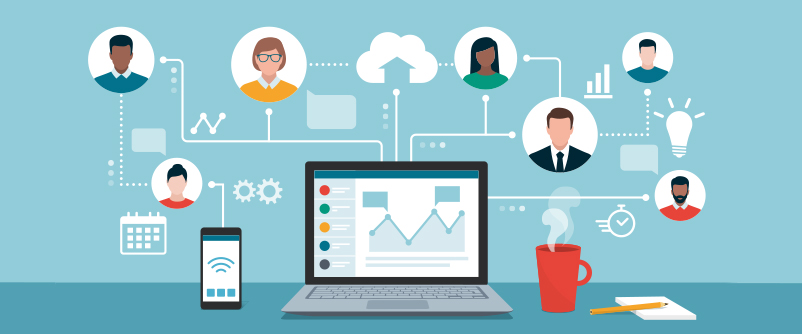
Management and HR have become important partners when it comes to the company's strategic work and planning of employees, their skills and tasks. The HR department has an overview of all employees, whereas a middle manager typically only has an overview of their own department.
If a middle manager needs help from another department, that middle manager will need to reach out to the other department's middle manager to find the right person for the job. With the help of HR, you'll be able to find the right person for the job faster across departments.
In an HR system, it is possible to control the level of access for different people, so that a middle manager, for example, only has access to data about their own employees. This makes the HR department a partner for management, as the HR department typically has access to all employee data.
Especially in this day and age of remote working, it has become even more important to have an overview of your employees and their skills. There isn't the same opportunity to talk to another manager or an employee to find the right person for a task. Here, the HR department can be a time-saving link, as they will be able to point to the right and most competent employee for the defined task.
Get an overview with HRM-Nordic
HRM-Nordic is a modular HR system that helps you create an overview of your employees, streamline the recruitment process, structure MAS and SDD interviews and much more. HRM-Nordic can also be integrated with many other systems, which facilitates the data flow between the company's various systems and HRM-Nordic.
If you're not sure whether HRM-Nordic can help your company create an overview of your employees, you can try it for free and without obligation - sign up here. We'll help you get started within 24 hours on weekdays.
If you want to know more about how HRM-Nordic can help your company plan and assign tasks to employees at their various home offices, please contact us by phone 70 26 32 25 or send an email to info@hrsolutions.dk.
All the tasks involved in the recruitment process are time-consuming: First, the job advert must be formulated and published. Next, the many applications and CVs need to be reviewed. You also need to make sure you have a good overview of the many different PDFs you receive. The most interesting candidates should be called for an interview - an interview that requires preparation.
Depending on how many job interviews are held, these interviews can also be time-consuming - and as a company, you may also be called for a second interview, which is again time-consuming and also requires preparation time.
Finally, when the right candidate is found, a response must be sent to the other job applicants. After the entire recruitment process, the onboarding process also starts for the new employee. A process that is again time-consuming and requires an overview.
Create more time for what matters most: Job interviews
Finding the right candidate for a job is always difficult. Especially when communication is based on a written application and CV. That's why one of the most important tasks in the recruitment process is the interview. It's during interviews that you can get a better insight into who the person behind the application is and you have the opportunity to test them with different questions.
Many people have a facade up when they meet new people. That's why many companies choose to conduct a personality analysis of the interesting candidates for the job. At HR Solutions, we have good experience with Extended DISC profiles, which reveal the applicant's conscious and unconscious behavior. Based on this knowledge, you can see if the applicant will fit in with the company and the team.
It's precisely the personal conversations that are important to create more time for. Time can be created by optimizing other recruitment processes - and not just optimizing, but also automating the processes.
Automate administrative tasks
Many companies have a job email where all applications come in, but we also see examples of job postings where applications must be sent directly to the recruiter. The latter example puts a lot of pressure on the recruiter and takes the focus away from their other duties.
When all applications are sent directly by email, many hours are automatically spent on creating an overview, handling PDFs with CVs and applications and, not least, sending manual responses to all applicants. This means that unnecessary time is spent on these tasks - tasks that could be automated.
HRM-Nordic Recruitment helps automate the recruitment process, from creating and sharing job postings to using email templates and screening applicants. We've written more about these processes here.
Get a handle on tasks when a new employee starts

Once the employment contract is signed, it's time to welcome the new employee. However, there are a number of tasks that need to be taken care of before the new employee's first day of work. For example, ordering a computer and keys, setting up the computer with the relevant programs, ordering flowers for the first day and so on.
If you don't have a set procedure for what tasks need to be completed prior to a new employee's first day, you can quickly lose track of the big picture. Once you lose the overview, there is also a high risk of tasks being forgotten or drowning in the other tasks of the workday.
Even when onboarding new employees, there are some processes that can be automated. With our Pre- & Onboarding module, you can create an overview of all the necessary tasks, create templates adapted to the job role and delegate tasks quickly and easily. In addition, you can indicate in the system how far along you are with a given task, so you also have an overview of what still needs to be done.
Welcome the new employee with an electronic plan
When a new employee is hired, there are also some standard tasks that the new employee has to go through. For example, an introduction to the company, the systems that are necessary in everyday life and orientation about the department and colleagues. In addition, the new employee will typically also have to go through an induction program, which ensures that the employee slowly but surely becomes familiar with their work tasks.
All of this can HRM-Nordic Pre- and Onboarding can also help. If you have video recordings of general information and introductions, the new employee will be able to watch these at their leisure without affecting the work of other employees.
Meetings can also be scheduled through the Onboarding module. Here you can set the date and time of the meeting, who is responsible, where the meeting will be held and a brief description of the content of the meeting.
With HRM-Nordic Pre- & Onboarding, there is ample opportunity to create structure and an overview of all the necessary tasks, and tasks can be streamlined so that more time is freed up for other tasks.
Learn more about how you can benefit from The HR system HRM-Nordic and the different modules? Then contact us by phone +45 70 26 32 25 or send an email to info@hrsolutions.dk.
As a company, you handle personal data from potential employees (job applicants), employees, and after the employee has left the workplace.
What data can be stored about employees?
As with both master data and customer data, companies are allowed to record and store personal data that is necessary for the business. Common personal data that companies have on their employees is, for example, name, address, date of birth (and social security number), phone number, email address, account information for payroll and possibly a picture of the employee.
Some of the above information is considered non-sensitive information, and therefore you do not need the employee's consent to store this information. Other information, such as the CPR number, is sensitive personal data and therefore you need the employee's consent to store it. Other sensitive data can be information such as criminal records, personality tests or ethnic background.
Who can have access to master data?
As an employer, you are of course allowed to process the master data that employees have provided themselves; name, address, phone number, etc. This data must of course be processed in a secure and confidential manner.
There may be a need for others to be able to access the employee's master data - and this is of course also allowed as long as it is relevant to the person or persons concerned. This could be in connection with the recruitment process, where several people are responsible for selecting job candidates, or if you have a recruitment agency. You may also have an external company to handle payroll payments etc.
If you have others handle personal and master data for your company, you are responsible for ensuring that these people or the external company comply with the Personal Data Act. Therefore, it is important that you draw up a data processing agreement that the external company (data processor) must comply with and act within.
How is employee data handled correctly?

As mentioned above, employers are, of course, allowed to handle employees' personal data. However, it must have a relevant purpose - and then you need to be aware of whether you need the employee's consent.
Many companies choose to display a photo of their employees on their website. However, you can only do this if you have the employee's consent. Therefore, many companies choose to write it into the employment contract, but if you don't have this, you need to make sure you get their consent.
If you have set up some control measures in connection with the employee's use of work computers, email, etc. you must make sure to inform the employee about this and what the purpose is. If you don't have a purpose for the controls, you need to reconsider whether they are necessary. Often these types of controls are used for security or documentation purposes. In other words, if an employee uses their work computer for private purposes, they need to know that the company can obtain information about this.
HRM-Nordic helps you handle employee data correctly
Many companies choose to implement an HR system - and it's also a great tool for managing employee data. With our employee database, HRM-Nordic Employee Center, it's easy to gather all your data in one place.
Each employee has their own employee card, where they can also edit basic information such as address and phone number. In addition, the HR system can also store other information for each employee. For example, consent to display a photo of the employee on the website.
With HRM-Nordic, personal data can be stored in one place from the first contact with the company, such as a job application, until the employee leaves the workplace. All data collected about the employee throughout the employment relationship can be stored on the employee's employee card. This means that data can also be quickly deleted again after the employment relationship ends, when the data is no longer needed by the company.
In addition to storing employee data, HRM-Nordic Employee Center also allows you to manage different user levels, so that the people who need access to selected employees' data can access that person's data - and only that person's data.
Want to learn more about HRM-Nordic Employee Center or our other HR system modules? Contact us by phone 70 26 32 25 or send an email to info@hrsolutions.dk.
With the HRM-Nordic recruitment system, you can purchase a module that can automate and streamline a number of processes in the recruitment process. For example, setting up job postings, screening and segmenting job applicants, sending out rejections and much more.
Streamlining recruitment processes
The recruitment process can be long and costly as - depending on the number of applicants - it can be time-consuming to sift through all the CVs and applications in search of the best match for the company and position.
Create the job posting

First and foremost, the job posting needs to be written. It's important to think critically about what competencies are needed to fulfill the position. By thinking critically about the desired competencies and specifying them in the job posting, the screening of job applicants becomes easier.
With the HRM-Nordic Recruitment System, the job posting can be created in 3 simple steps: 1) Job description, 2) Criteria and job requirements and 3) Questions.
The job description itself is about providing information about the job. This is where the actual description of the job should be entered. In addition, you enter the application deadline, location, etc. The job description contains the elements that we know from other job postings.
Under criteria and job requirements, you can specify which skills are required from the applicant. For example, you may need to be able to speak and write German or have a driver's license to be able to perform the position. These requirements are listed under criteria and job requirements in the system.
Finally, you have the opportunity to ask critical yes/no questions to the applicant to clarify whether the applicant has the necessary competencies. Completing these yes/no questions is optional, but it can help you weed out applicants who don't have the necessary skills.
Share the job posting
When you create and publish a job posting through HRM-Nordic Recruitment, you have the option to automatically share the job post on social media. Of course, you also have the option to display the job posting on your own website.
Many job seekers use different job portals to search for new job postings. Therefore, you can easily share your job posting automatically via these job portals.
This saves you time compared to having to manually create the new job posting across the different platforms.
Use email templates
During the recruitment process, a number of different emails are often sent out to applicants. These can be emails with the subjects "Thank you for your application", "Invitation to interview", "Unfortunately, you didn't get the job", etc.
With HRM-Nordic Recruiting, you can automate these emails so that all applicants automatically receive, for example, "Thank you for your application". Once the right candidate has been found, a rejection email should also be sent - the system can also do this automatically, so you don't have to manually send an email to each applicant.
For positions that receive hundreds of applications, this will save a lot of time compared to manually sending out these emails to each applicant.
Screening of applicants
If you have set up critical yes/no questions as part of the job posting, you can first and foremost weed out the applicants who don't meet your requirements. This can be done quickly and easily based on the applicants' answers. Next, you can compare the requirements you set up under criteria and job requirements when you created the job ad.
With these two tools, you can quickly weed out applicants who are not qualified for the job, as well as compare their qualifications and skills.
Especially in this process, there is a lot of time to be saved. Applicants who don't have the necessary skills can be quickly weeded out and you can focus your time on the applicants who are qualified for the job.
Save applicants in your own CV database

In addition to streamlining the recruitment process, HRM-Nordic Recruiting also allows applicants to save their CV in your CV database. As part of the application process, applicants can choose whether they want to save their CV - and emails are automatically sent out regarding extensions in accordance with GDPR.
For you, this means you get a database of people who are interested in working for your company and who are potentially qualified for a future position.
The next time you're looking for a candidate for a job, start by checking if there's a qualified person in your CV database. If you're lucky, the right candidate will be hiding in your CV database and you can shorten the recruitment process even further.
Do you have any questions about HRM-Nordic Recruitment or would you like to try the module for free for 30 days? Then contact us by email: info@hrsolutions.dk or call us at 70 26 32 25.
On HR Solutions you will also find other tools that can help you in your recruitment process.
Previously, it was only possible to send out well-being surveys via email. This is suitable if the target group is, for example, office workers who check their email several times a day. But what about those who don't check their email regularly? For them, it makes sense to receive an SMS instead.
Where can the new feature be used?
Of course, it's up to the individual company to decide when it makes sense to send an email and when it makes sense to send an SMS. We believe that SMS is a popular solution when it comes to feedback from production departments, from customers whether B2C or B2B, from students and from other groups who frequently use their phones.
An example of where text messaging is particularly useful is in a manufacturing company where there are three shifts a day. The production employees often don't have an email, but they do have a phone in their pocket. Here, the company can quickly get feedback on working conditions on an ongoing basis.
This allows the company to get quick feedback from employees who may have been difficult to get feedback from when sending out emails - and the company can easily compare the data between different work teams to get an overview of which work teams may be experiencing challenges that other work teams are not.
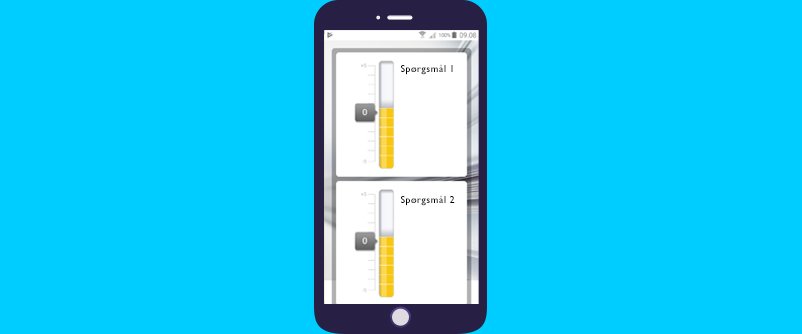
When an SMS is sent, the recipient will receive a message with brief information and a link to the questions, which can be answered quickly using a scale.
Another example could be from a retail business where you have contact data on the customer - for example, in connection with a customer club. Here you could send an SMS to the customer and get quick feedback on customer service in connection with a purchase.
Get to know the new feature
On Friday, December 13, 2019, we will be hosting a zoom meeting where we will zoom in on this new feature so you can get to know it. The zoom meeting will be held at 9 am and lasts approximately 30 minutes. You can follow along online via this link: https://zoom.us/j/258269198
We hold regular zoom meetings where we present new features or do a review of the system. You can see our upcoming zoom meetings here.
Zoom meetings are for everyone, whether you are an HRM-Nordic user or not. We also hold zoom meetings where we walk you through HRM-Nordic so you can learn more about the system. This is especially useful if you are considering whether HRM-Nordic is suitable for your company. Remember that you can always contact us with questions, just as you can try the system free and without obligation for 30 days.
Developed according to the user's wishes
We continuously develop our HR system and the different modules we offer. That's why we listen to our users' wishes for improvements and developments - because it's our users who should benefit from HRM-Nordic.
The new addition that allows you to get feedback via SMS was a request from a user who needed to get quick feedback from their hourly employees - a group that is also very phone-oriented.
Are you missing any features?
Do you use HRM-Nordic and are you missing any features in the system? Then we would love to hear from you! We are constantly developing our system - both in terms of further development of a module, but also the development of new modules. Therefore, if you have a feature that could make your work even more efficient or make the system more efficient, we want to hear from you. This applies regardless of whether you are a user of Employee data (Employee Center), Pre- & Onboarding, MAS/MUS system or Measure.
Send your feedback and requests to info@hrsolutions.dkor call us at 70 26 32 25.
What should the conversation focus on?
As a manager, it's your responsibility to manage the conversation. You are the one who can control what the focus is throughout the conversation.
Most companies send a standardized performance review form to the employee to fill out prior to the interview. This form is a great tool to guide the conversation and ensure that the employee has also reflected and considered the different topics. This way, the foundation for the conversation is laid.
Update the performance review form
Is the same form used year after year? Or is it updated every few years? Or is it even customized to the individual employee?
Just as your business evolves over time, so do your employees. Therefore, it's not always appropriate to follow the same form year after year. Part of your preparation as a manager should therefore also include reviewing and updating the form the employee is required to fill out.
If you're a management team preparing the form for the performance appraisal interview together, you should talk about what your common goals are for the appraisals and how they should be based on the company's current strategy and goals.
What is the employee's current situation?

If you are responsible for many employees, it can be difficult to maintain an overview of each individual employee. In this case, it's important that you familiarize yourself with each employee's current situation as part of your preparation. Here, a HR system help you create an overview of the employee's tasks, skills, etc.
When you know the employee's situation, skills and tasks, you will also know how each employee can contribute to achieving the company's overall goals. With this knowledge, you'll also know which skills each employee needs to develop.
To get an even deeper insight into the employee's behavioral style and what motivates them, you can take a closer look at the employee's personal profile using the DISC profile, for example.
Have all agreements from the last performance review been met?
A template for SDD interviews also makes it easier to maintain an overview of the agreements made at the previous interview. It's your job to look back at what was agreed and whether these agreements have been kept. If the agreements were not kept, was there a reason for this? Perhaps the agreements should be included and be part of the new agreements.
HRM-Nordic helps you through the SDD
Our HR system, HRM-Nordic, helps you prepare for the important performance review interview. Our HR system is modular and offers a module for just Performance appraisal interviews. Here you can create your template for the conversation, as well as send out reminders.
Get an overview of individual employees via the employee database, Master data. Through this module, you have the opportunity to compare the employee's skills and the requirements of the position. From this, you can get a quick overview of the employee's development areas - something you can discuss and plan for during the performance review.
If you want to learn more about how HRM-Nordic can help you prepare for and conduct appraisals, please contact us by phone 70263225 or send an email to info@hrsolutions.dk.
Many companies that purchase an HR system quickly realize that there are a lot of benefits to it. You can read about what these benefits are in our previous blog posts.
Unfortunately, there are also companies that only see HR systems as an additional cost to their business. This is usually because these companies have opted for expensive packages with many advanced features and systems that were not relevant to them.
If your company is acquiring an HR system or replacing your old HR system with a newer, more feature-rich model, there are some factors to consider beforehand to avoid a costly mistake.
Packaged or modular HR system?
Packaged solutions don't have to be an expensive all-in-one solution that doesn't benefit your business. There are benefits to both packaged and modular solutions, and which HR system to choose depends entirely on the size and needs of your business.
A packaged HR system comes with a wide range of functionality as standard. This can be a great choice for large companies and businesses that need many different systems to help manage and organize employee data and complex business processes.
However, an HR system with opt-in and opt-out modules is a good solution for small and medium-sized businesses. A modular HR system allows your company to select the modules you need and that are most relevant to you. With a modular HR system, you can create your own unique solution tailored to your needs.
If you choose a modular HR system, you can select the solutions that are relevant to you. In addition, you have the option of adding more modules to the HR system if your company expands or adds more processes that may be useful to systemize.
Choose an easy-to-use HR system tailored to your business needs
Once you've decided whether a packaged or modular solution is the right choice for your business, you also need to decide what features the HR system should include.
It is important to determine whether your company has simple or more complex business processes. The individual processes in companies can vary greatly from one company to another, so it's a good idea to start with your own company's processes.
If your company has a simple and straightforward business structure with few and simple processes, you may want to steer clear of HR systems with a lot of advanced features. It's not necessary for your business and can be a waste of money to invest in.
A good tip is to choose a user-friendly HR system that matches the scope and complexity of your company's processes. If you choose a modular HR system, you can, for example, choose a recruitment system and an employee database as a start and over time expand the HR system with more modules as needed and desired.
Consider your company budget
Once your company has decided which modules and solutions will make up your specific HR system, you need to determine if your desired HR system fits within your budget.
Make sure there is a match between the company's processes, needs, budget and wishes for what the new HR system should include. As mentioned, you can always start small and expand your HR system at a later date as your company grows and becomes more profitable.
At HRM-Nordic, you can try our solutions for free for 30 days to find the best solution for your business.
Choose an HR System that complies with GDPR
You are covered by the GDPR when you store any kind of data - whether it's employee or customer data.
Therefore, you need to make sure that your HR system also complies with the General Data Protection Regulation (GDPR) so that you can confirm to the Danish Data Protection Agency that the processing and storage of personal data is in accordance with the GDPR rules.
With HRM-Nordic's solutions, you are ensured that your HR system stores and processes personal data in accordance with the applicable rules in the General Data Protection Regulation. Contact HRM-Nordic at 70 26 32 25 and learn more about your options for an HR system with solutions that fit your business.
Some other obvious benefits of HR systems are:
- Data is gathered in one place
- Creates an overview
- Complies with GDPR
- Sends automatic reminders
- Customizable to the size and needs of your business
Employee data in one place
HR systems are based on an employee database where all employee data can be saved and stored. This makes it easy to search for information about an employee, unlike in the past when you had to search through one or more different binders to find the right information.
Once the employee data is gathered, it's easy for HR to get a complete overview of an employee's skills, responsibilities, and the documents that relate to the employee (e.g. employment contract, attachments, etc.)
The HR system creates an overview of an employee's employment period
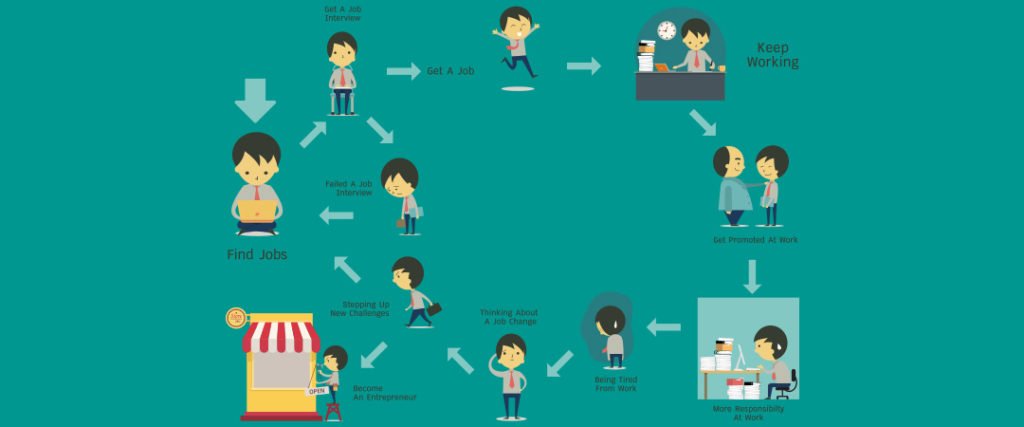
HR systems is not just an employee database. Rather, it is a tool that supports the entire hiring process for an employee, from the job application in the recruitment process to the end of employment.
HRM-Nordic offers modules for recruitment of new employees, employee pre- and onboarding, employee development and, of course, an employee database.
The Recruitment module helps you spread your job posting, collect and store applications and send automated rejections to unsuccessful applicants. In addition, you have the option to store applicants' CVs in a database (provided the applicant agrees to this). From the database, you can potentially find candidates for a new position later on.
The Pre- and Onboarding module provides an overview of all the tasks associated with a new hire. This includes ordering a computer and other work tools, keys, setting up a computer and email, and inviting them to a welcome meeting. You can also plan an introduction to the company, department, etc.
In general, the modules allow you to create different templates that facilitate your administrative work processes. Not only do you save time by only having to fill in the relevant templates, but you also ensure that the necessary reminders and emails are sent out in a timely manner.
GDPR and the HR system
As HR systems store large amounts of personal data, it's also important that the system is GDPR compliant. With HRM-Nordic, you can control who should have access to certain data. Some may need access to all data, while others may only need to see data for a few people, such as a department manager.
By having different access levels, all employee data is protected so that only relevant people can access it. Anyone else will not be able to access data.
Send automatic reminders with HRM-Nordic
Especially in connection with pre- and onboarding of new employees, as well as in connection with (follow-up on) a employee performance appraisalautomated reminders may need to be sent out.
In a busy workday, it doesn't take much to forget that you should have sent an email with information to a new employee or that you need to follow up on a performance review by a certain date. You may also be responsible for a task that needs to be completed by a set deadline, where it's also beneficial to get a reminder.
The HR system HRM-Nordic helps you with this. You can set up these automatic reminders, which help you meet deadlines and follow up on selected tasks - giving you a good overview.
Get an HR system that's customised to your business
Many people associate an HR system with a costly and complex system that requires a new investment if the company grows and the system needs to handle even more employees.
Today, the above is far from the truth. The vast majority of HR systems today are developed as a cloud solution, which first and foremost means that you can access the system from anywhere. In addition, cloud solutions also have the clear advantage that they can easily be scaled up or down according to the company's needs. This means that the HR system can always be adapted to the size and needs of the company.
This also applies to HRM-Nordic. Here you only pay for the number of employees, annual recruitments, etc. that you need. HRM-Nordic is also one of the cheapest HR systems on the market, which makes the system attractive to many companies - especially small and medium-sized companies.
In addition, HRM-Nordic is modular. This means you only pay for the features (modules) you need.
Summarizing
There are many benefits to implementing an HR system in your company. Data is gathered in one place and stored securely and in compliance with GDPR. Through the HR system, you also get a complete overview of all employees.
HR systems help streamline work processes and even save time. In fact, our customers have seen their time consumption decrease by 50% after implementing HRM-Nordic. This frees up time that you can spend on other tasks.
If HRM-Nordic sounds like something for your company, please contact us. We offer you a 30-day trial period - it's non-binding and at no cost to you. You also choose which modules you would like to test. Sign up for a trial of HRM-Nordic here or call us on 70 26 32 25if you want to hear more.
 English
  Dansk
Dansk  Norsk bokmål
  Svenska